

Case studies / Music production studio
Saiko’s Studio, Bengaluru.
Before we treat your room, we treated ours.
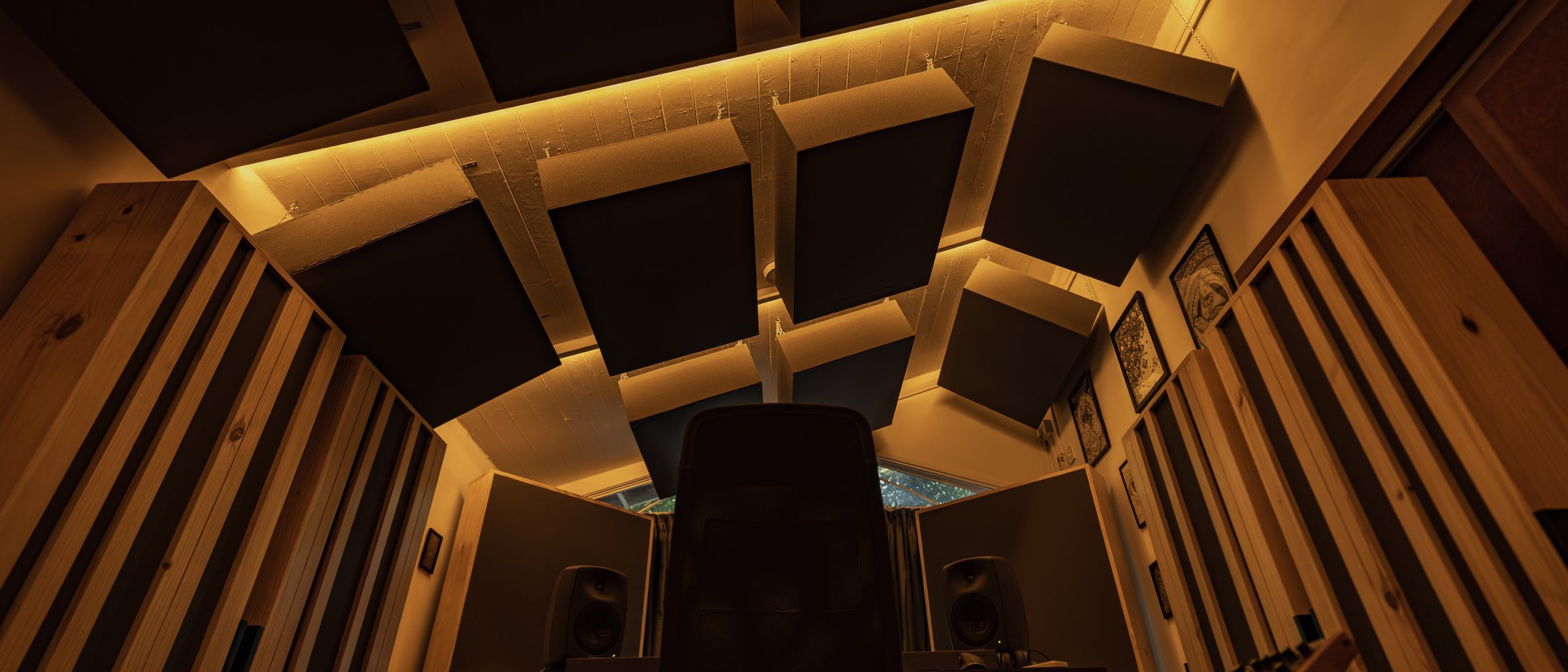
- Room
- Music production and mixing studio
- Treatment
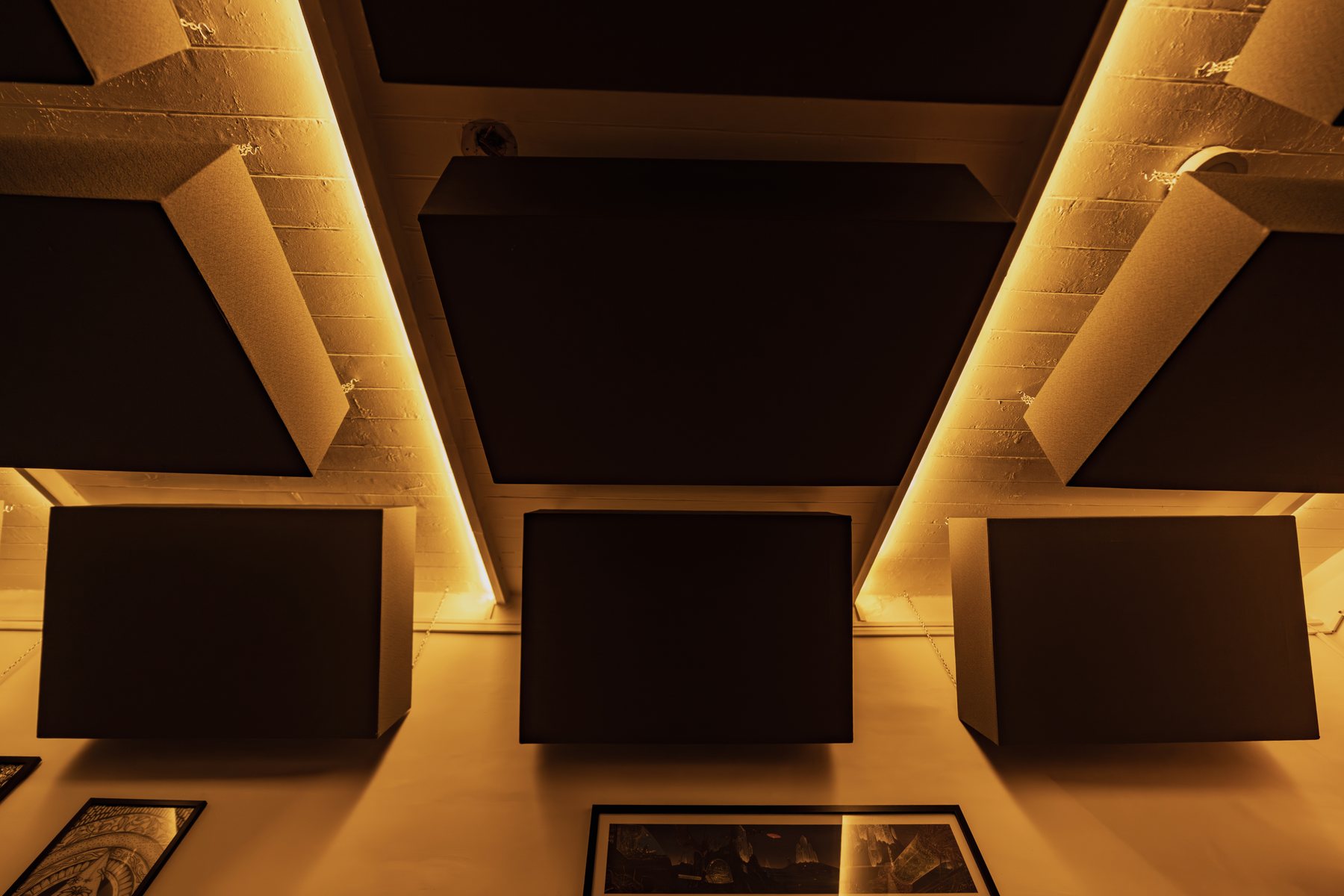
- 20 × TRU: Sink, 7 × TRU: Scatter
- Placement
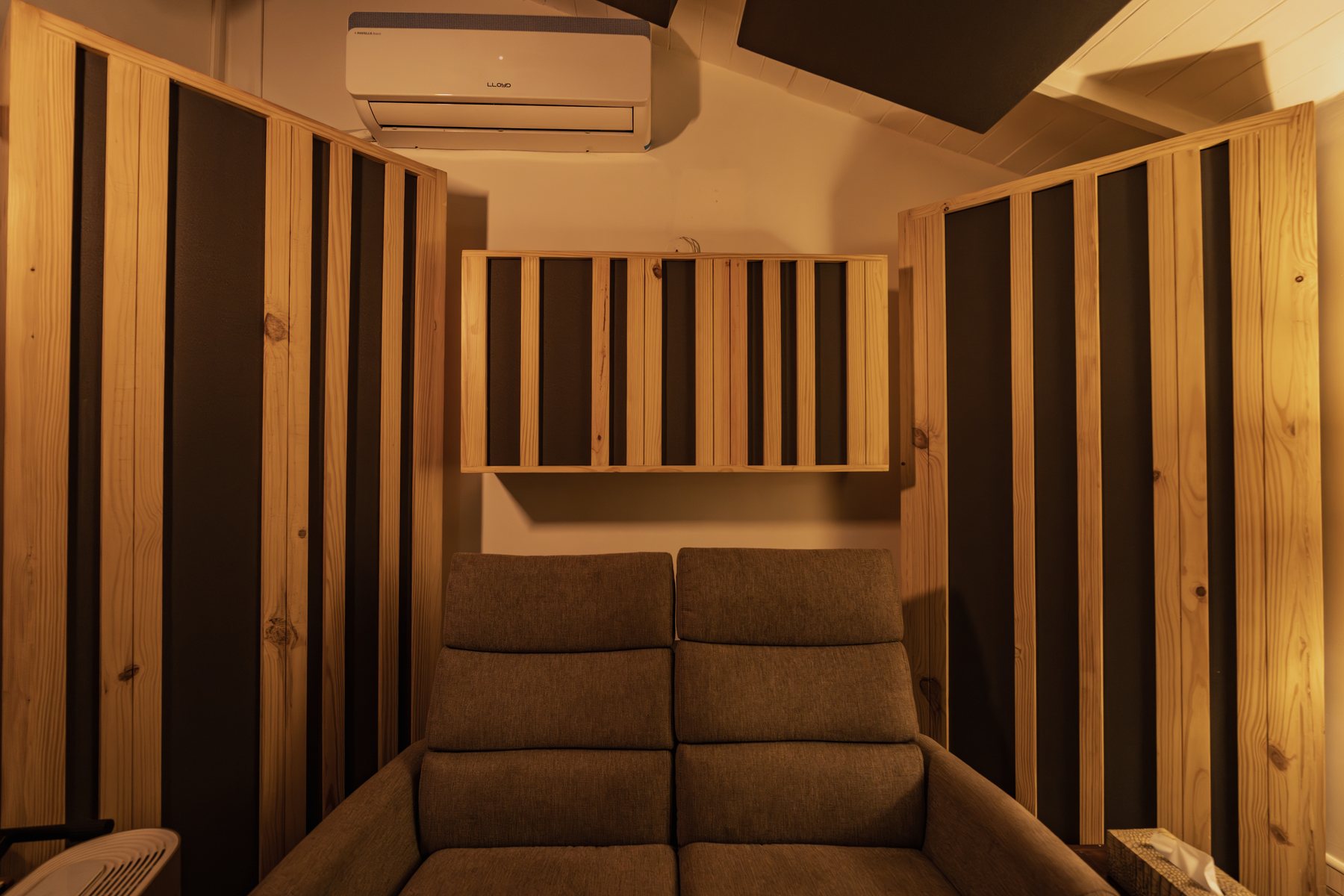
- Corners, walls and ceiling
- Result
- At 50 Hz, decay cut from 1.4 s to 0.35 s
The room
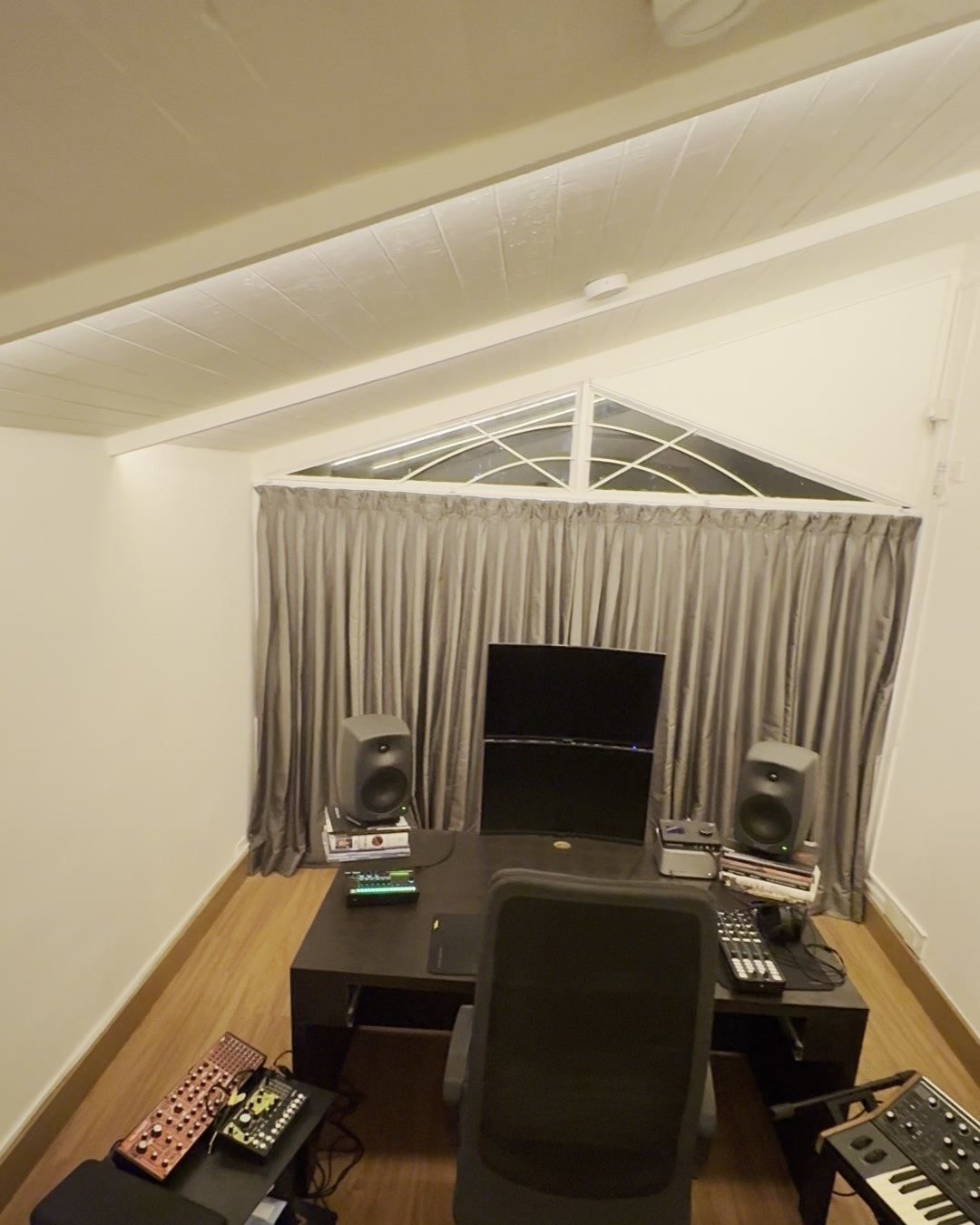
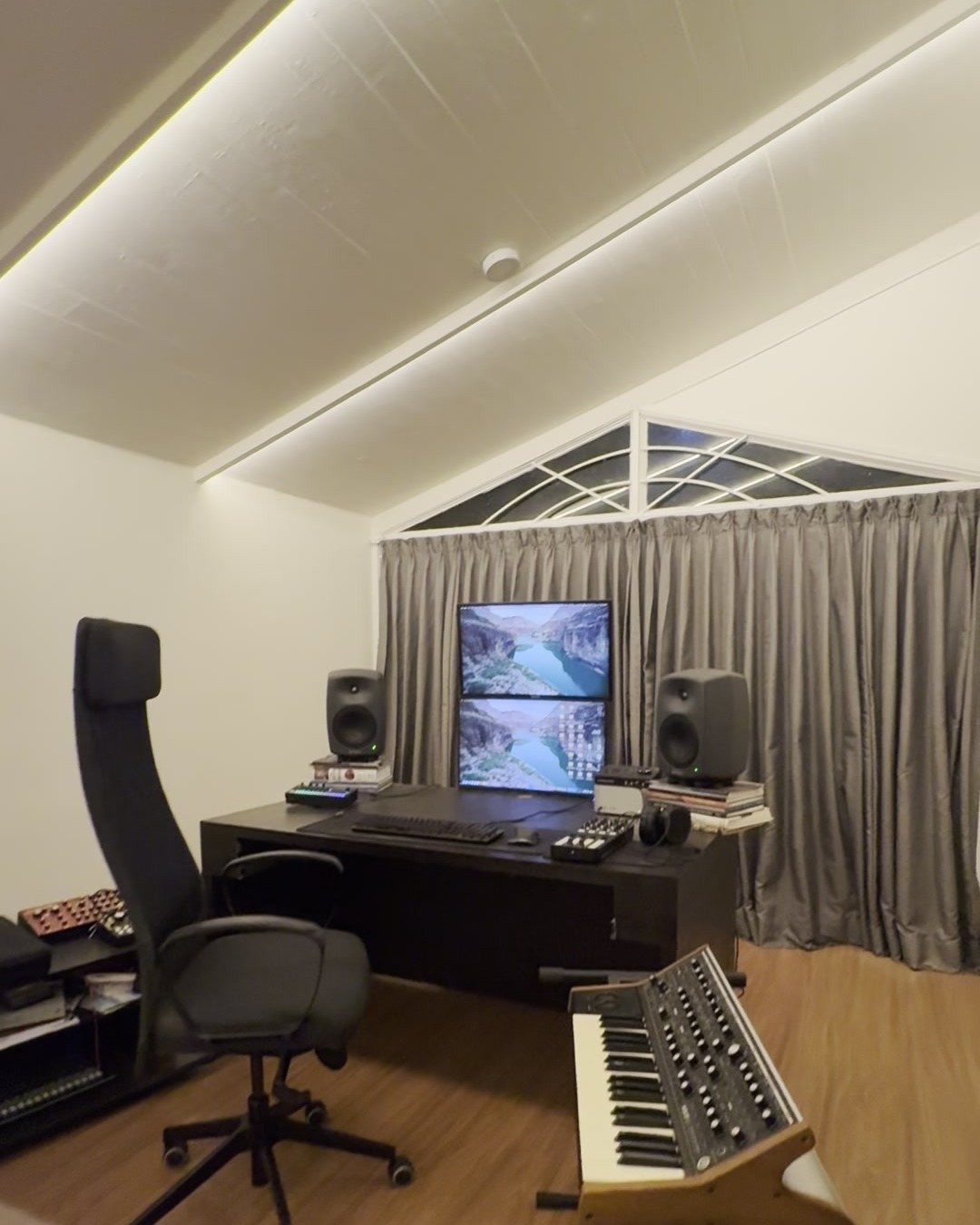
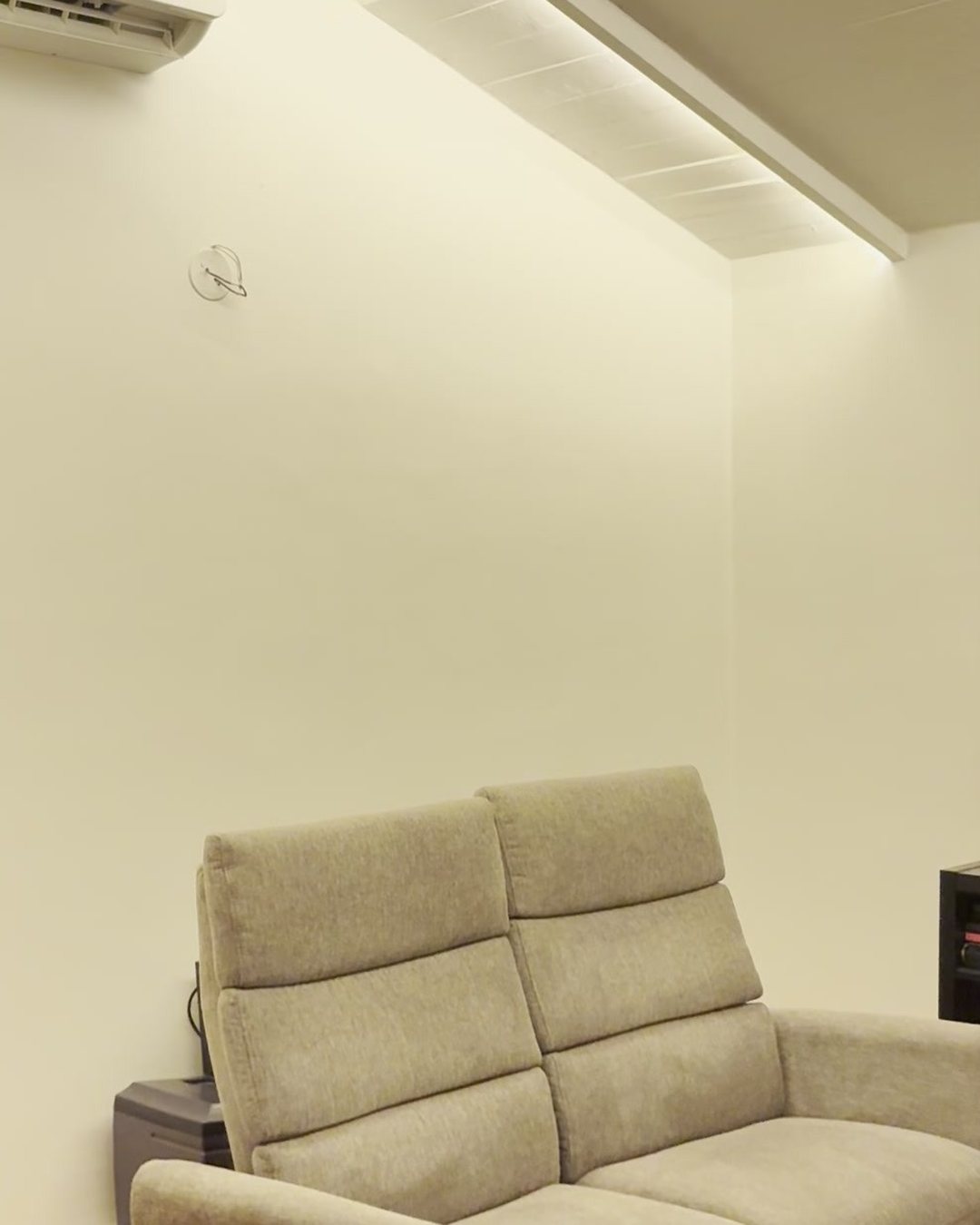
Our own room, untreated.
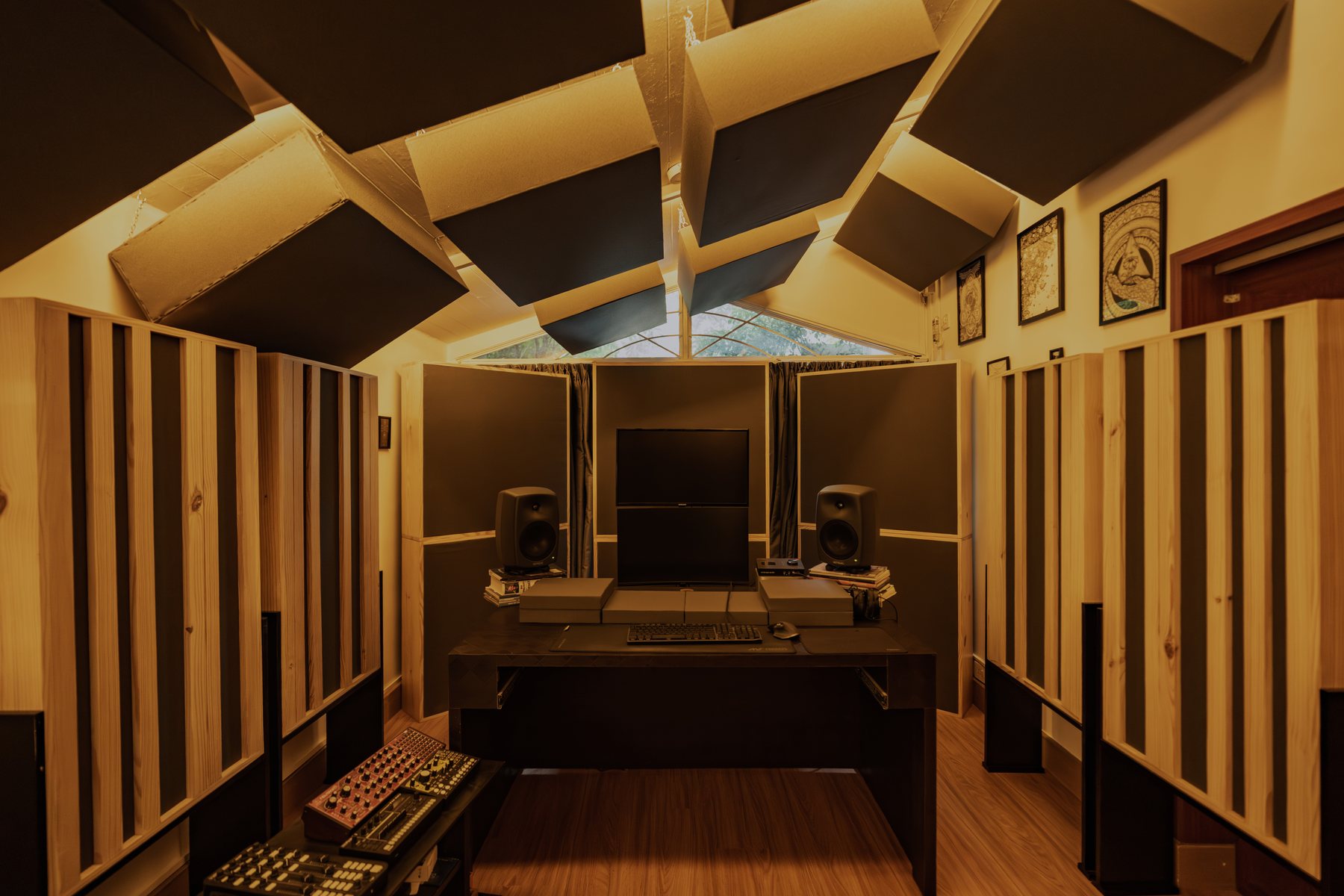
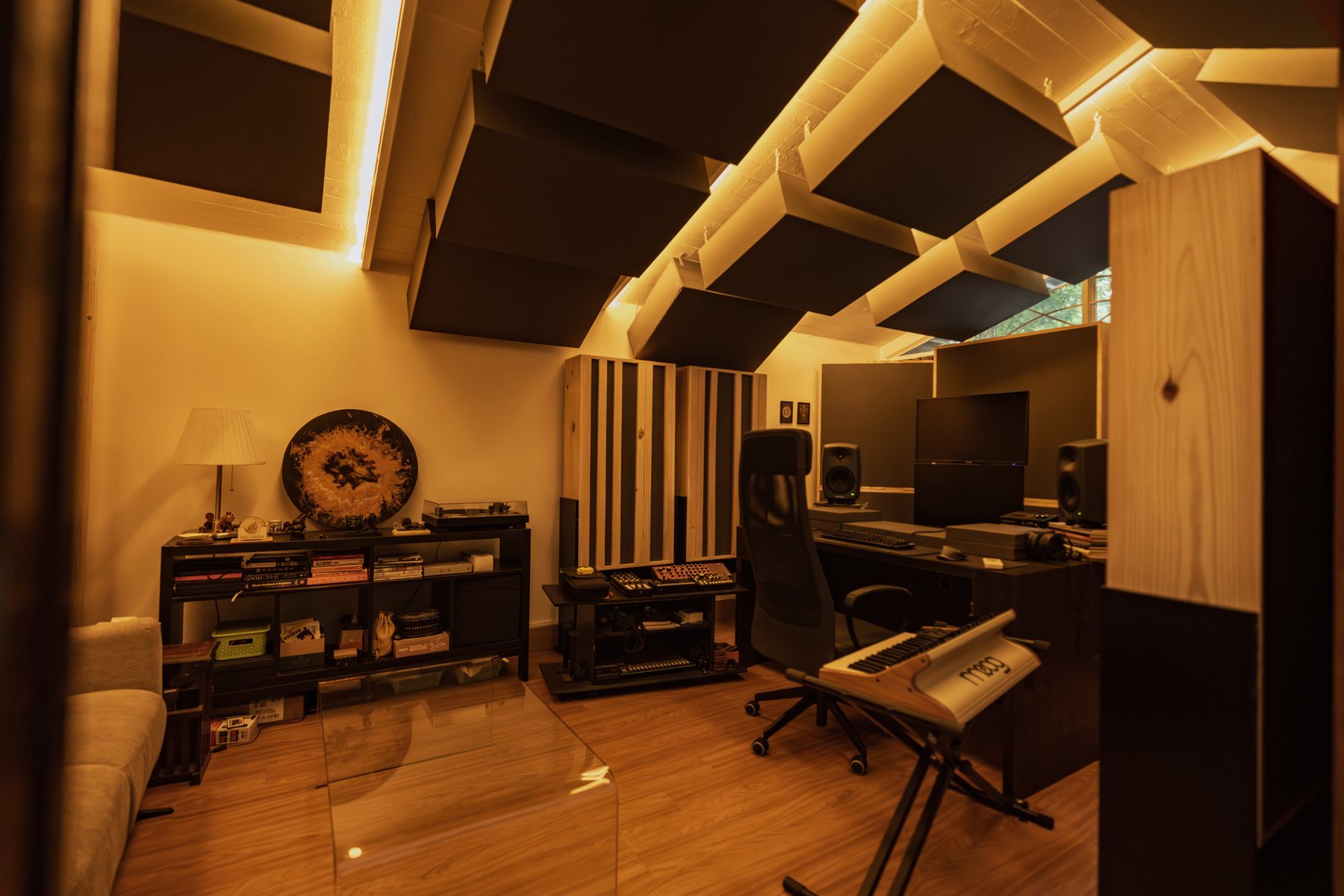
Saiko’s Studio is intended for music production and mixing. The room isn't soundproofed, has a sloping roof, a window on the front wall, another at the back, and the walls are a mix of materials, so no two sides behave alike.
The goal was studio-grade results in a room most people would never pick for one.
Our approach
Corners first, then the reflection zones.
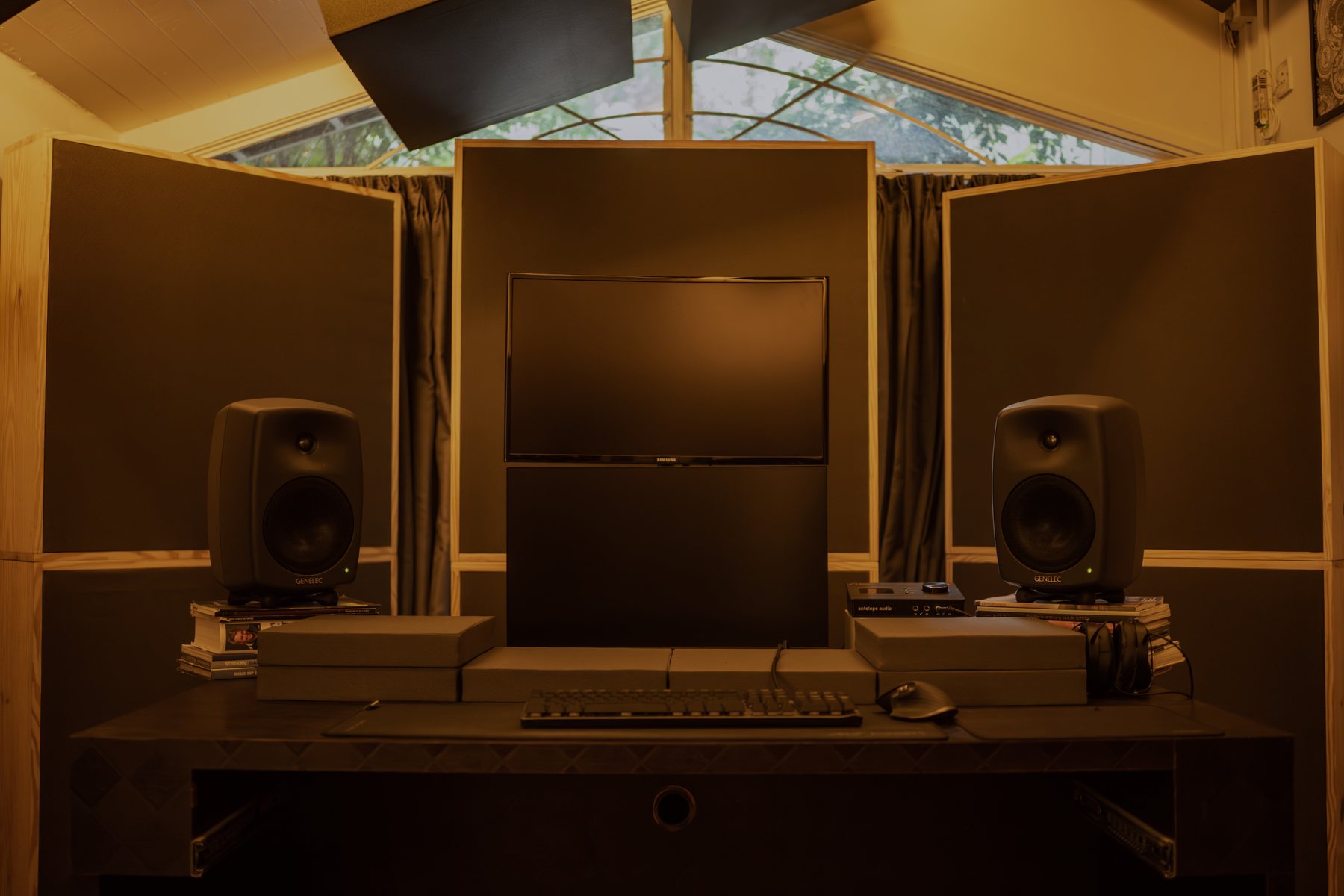
We set the listening position first, then planned the treatment from the shape of the room and speaker placement.
Corners first, then the reflection zones between each speaker and the seat.
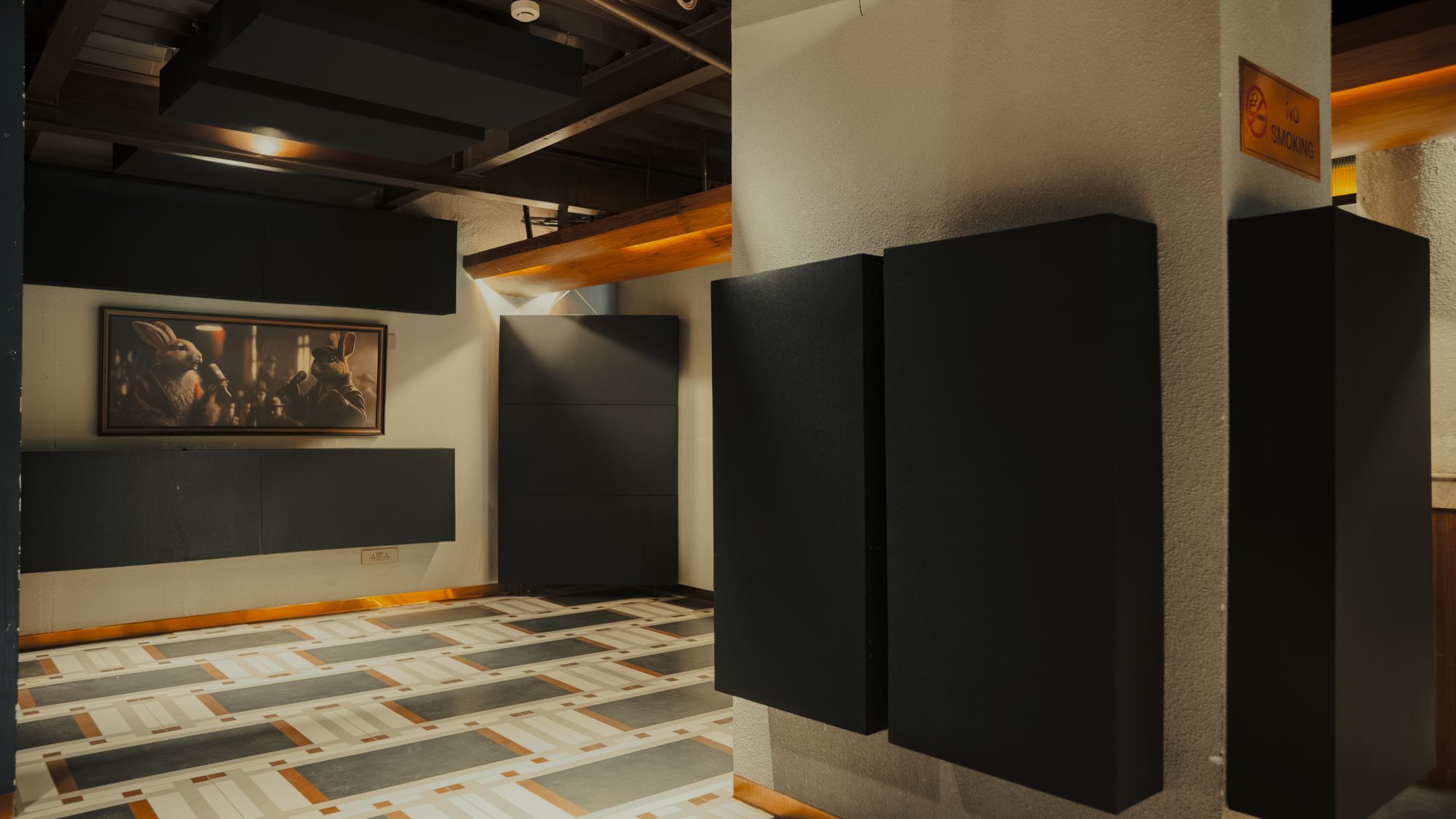
27 TRU panels in total, 20 × TRU: Sink and 7 × TRU: Scatter in different sizes.
A 50 Hz wave is about 23 ft long. No membrane or active traps here, just TRU panels.
Photography by @triptuner
The results.
1.4 s → 0.35 s
Decay at 50 Hz
And shorter everywhere else.
21 dB
Quieter ringing around 50 Hz
Measured 300 ms after the note.
What changed, plot by plot.
Reverberation time.
At 50 Hz, decay cut from 1.4 s to 0.35 s, and shorter everywhere else.
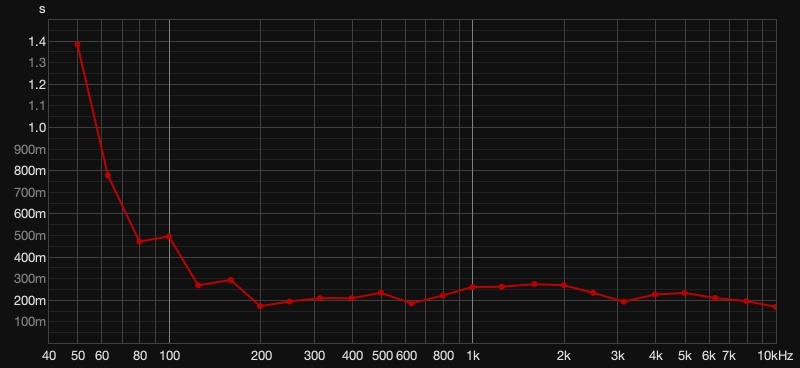
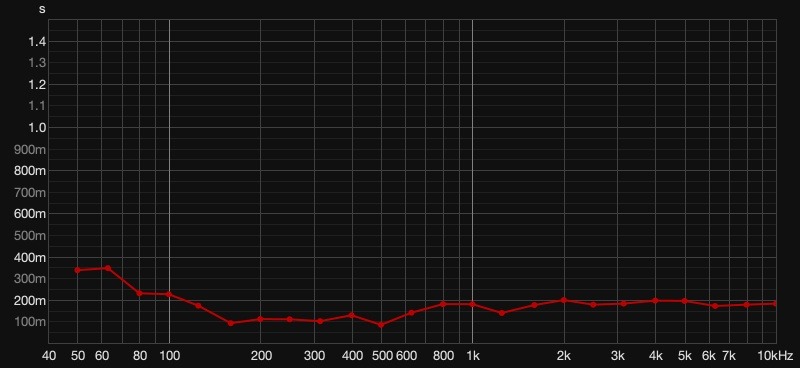
How long sound stayed in the room, by frequency. Lower is faster. Reported as T20, in 1/3-octave bands, as the measurement software reads it.
Low-end decay.
Around 50 Hz, the ringing is 21 dB quieter.
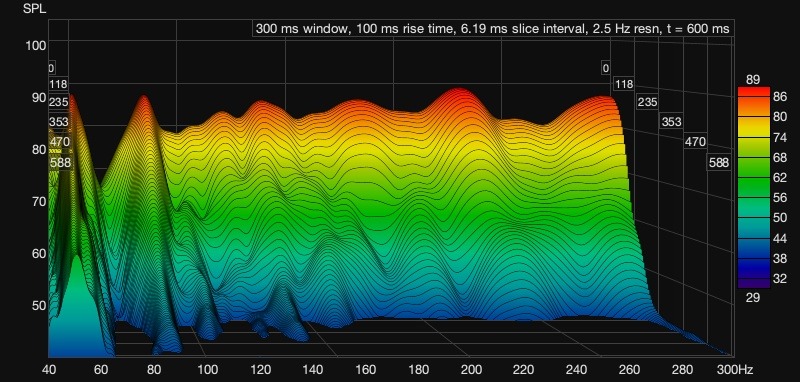
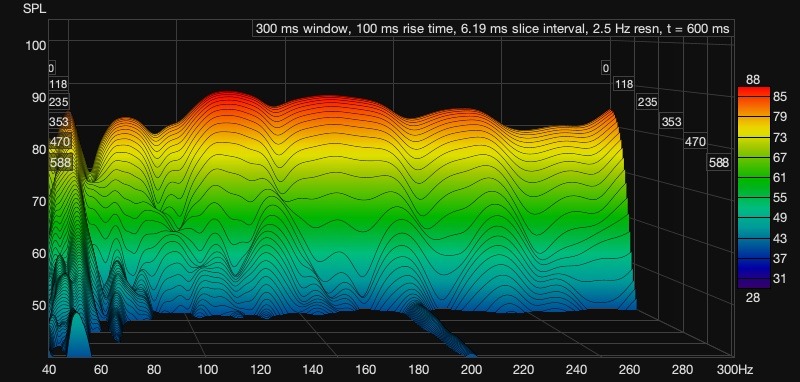
Each ridge running back into the plot is a frequency the room held on to. Shorter tails mean energy clears faster. 40 to 300 Hz, over 600 ms. The 21 dB is measured 300 ms after the note.
Notes on the measurements
How we measured
- Position
- Measured from the listening position
- Microphone
- Behringer ECM8000
- Speakers
- Genelec 8040B, 48 Hz to 20 kHz (±2 dB)
What panels can't fix
Treatment tames peaks and ringing, and it made the dip around 60 Hz shallower, from about 12 dB down to about 8 dB.
Most small rooms keep some null at the seat. Closing the rest takes a subwoofer, not more panels.
Get in touch.
Tell us what the purpose of the space is and what is not working about it.We will give you an honest read on what the room is doing and what it would take to change it.